Unlimited eSIM Data Plans That Work Instantly in 150 Countries
An eSIM data plan can be activated in under two minutes without ever touching a physical SIM card. It works by embedding a digital profile directly into your phone’s chip, letting you switch carriers or destinations instantly through a simple QR code scan. You keep your existing number active while adding a local data plan for travel, often cutting roaming costs by up to 90%. This is the fastest way to stay online globally—no plastic, no waiting, just pure connectivity on demand.
What Exactly Is an eSIM Data Plan and How Does It Differ From a Physical SIM?
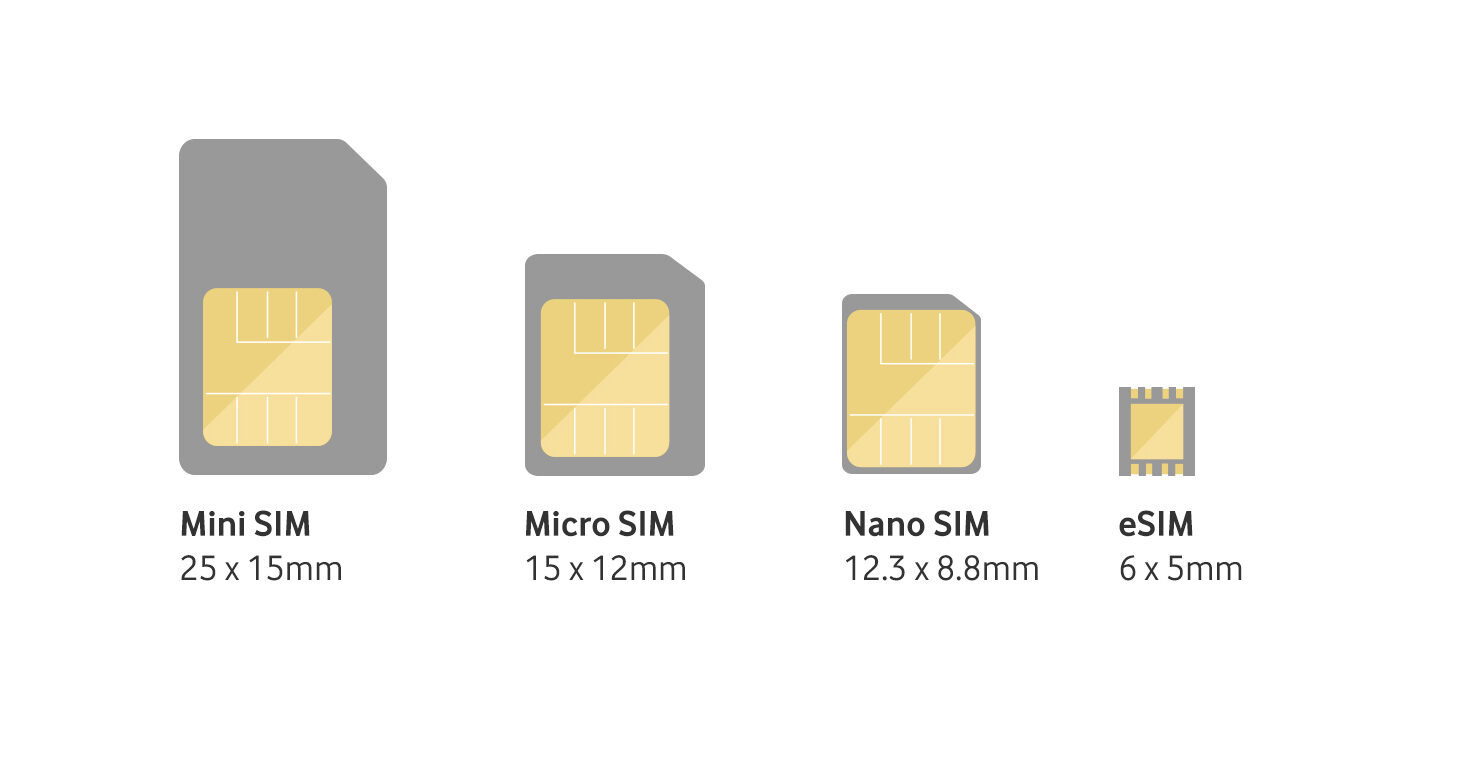
An eSIM data plan is a digital profile embedded directly into your device’s hardware, activated by scanning a QR code or entering a code—no physical card is inserted. It differs from a physical SIM by storing your carrier credentials on a chip soldered into your phone, tablet, or laptop. With an eSIM data plan, you can switch carriers instantly through your settings, hold multiple profiles simultaneously, and download a new plan within minutes without visiting a store or waiting for delivery. A physical SIM, in contrast, requires swapping plastic cards, risks damage or loss, and locks you to one carrier per slot. For data-only usage—like travel, hotspots, or secondary lines—an eSIM plan offers faster activation, remote management, and zero hardware hassle, making it the superior choice for pure connectivity.
Breaking Down the Embedded SIM: Where Your Data Lives
The embedded SIM chip is physically soldered onto your device’s motherboard, but your eSIM data profile doesn’t live there as a physical card. Instead, your credentials—the network authentication keys—are securely written into a tiny, tamper-proof secure element within that chip. This digital vault holds your operator’s encrypted subscription data, meaning your actual “address” on the network is a software-based identity. When you switch plans, your device rewrites this secure space, overwriting the old keys.
Storage is isolated from your phone’s main memory for security.
Multiple profiles can coexist, but only one active at a time.
Your data remains even when you remove your physical nano-SIM tray.
Why Switching From a Plastic SIM to a Digital Profile Changes Your Travel Setup
Switching from a plastic SIM to a digital profile fundamentally alters your travel setup by decoupling connectivity from the physical device. Instead of visiting a local kiosk or swapping cards at the airport, you install a profile over Wi-Fi before departure, meaning your phone remains active the moment you land. Travel becomes a digital provisioning process where you manage multiple regional profiles simultaneously, toggling between a home number and a local data plan without opening the tray. The logistics of connectivity shift from hardware logistics to pre-trip configuration. Your setup changes in three sequential ways:
You eliminate the risk of losing a tiny card mid-trip.
You can add a new destination’s coverage mid-journey via QR code or app, even if you’re already abroad.
You retain one phone number for calls while using a separate data profile, avoiding forced roaming from the physical SIM.
The result is that your packing list drops a physical item, while your pre-flight checklist gains a profile activation step—altering when and how you secure connectivity.
How Do You Activate and Set Up a Digital Data Plan on Your Phone?
To activate an eSIM data plan on your phone, you usually start by scanning a QR code you receive from your provider via email, or by manually entering the activation details in your phone’s settings. On an iPhone, head to **Settings > Cellular > Add eSIM**; on Android, it’s typically **Settings > Connections > SIM manager > Add eSIM**. After scanning, the profile downloads instantly, and you can label it as „Data” to avoid confusion with your primary line. Before you travel or use data, make sure you switch your mobile data to that eSIM line and enable „Data Roaming” if the plan requires it. Most providers also allow a quick setup through their app, which auto-fills everything for you. Once installed, reboot your phone, and you’re ready—the plan should appear immediately in your network settings. That’s the core process for getting a digital data plan up and running hassle-free.
Scanning the QR Code vs. Manual Entry: Which Activation Method Is Faster?
For eSIM data plans, QR code scanning is the faster activation method in nearly every scenario. You simply open your phone’s camera or the carrier’s app, point it at the QR code provided, and the profile downloads within seconds. Manual entry requires typing a long activation code—often 20+ characters with mixed case and dashes—which is error-prone. One mistyped digit forces a re-entry cycle. The practical sequence is: (1) scan the QR code from the carrier email or website, (2) confirm the profile appears in Settings > Cellular, and (3) select it as your active data line. Manual entry adds at least a minute of careful typing and retyping, so unless your screen is cracked or the QR code is damaged, scanning is unambiguously quicker.
Setting the Correct APN Settings for Your New Carrier Profile
After installing your eSIM data plan, the carrier profile often auto-configures, but a manual check of the Access Point Name (APN) settings is essential for stable connectivity. Navigate to your network settings, select the new eSIM line, and verify that the APN field exactly matches the string provided in your activation email or carrier app—commonly something like `globaldata` or `iot.4g`. Mismatched or blank APNs typically yield a „no internet” state despite showing signal bars. Enter the correct username and password if your carrier requires them, then save and reboot your device to force the profile to reload.
Q: What if my eSIM shows signal but no data connectivity? A: This almost always indicates an incorrect or missing APN. Re-enter the exact APN string, ensure the MVNO type is set to None or the specified value, and toggle airplane mode to refresh the session.
Managing Dual SIMs: Keeping Your Home Number Active While Using Secondary Data
When you install an eSIM data plan, your physical SIM often remains active, but you must manage both lines to avoid surprise charges. Start by labeling your home line as “Primary” and the data eSIM as “Secondary” in your phone’s settings, then set the secondary line as the default for cellular data. Ensure your home number uses the local network only for calls and texts, while **keeping your home number active without roaming fees** requires switching voice and SMS to “Primary” and disabling data on that line. Critically, check that iMessage and FaceTime are bound to your home number so you don’t miss verification codes or two-factor authentication texts. For outgoing calls, choose “Ask Every Time” to pick your home line, avoiding accidental data-call costs.
What Should You Look For When Comparing Prepaid Data Packages for Travel or Daily Use?
When comparing prepaid eSIM packages, prioritize the validity window versus your actual trip length, as many plans activate on purchase, not first use, leading to wasted days. Check the data bucket’s speed tier—unlimited plans often throttle to 2G/3G after a small high-speed allowance, so scrutinize fair-use policies for daily caps. Verify coverage maps against your exact destinations, especially for regional plans that may exclude specific countries. For daily use, compare per-GB cost against short-term passes; a 1GB/day plan is ideal for maps and messaging, while streaming requires 5GB+. Confirm tethering is permitted if you need hotspot access, as some prepaid eSIMs disable it. Finally, review the operator’s app for real-time usage tracking and top-up options.
Always calculate the cost per usable GB after speed throttles, not the advertised total, to avoid overpaying for unusable data.
Choose a local-region package over a global one if your itinerary is single-country—it’s typically cheaper.
Matching Data Allowance to Your Usage Habits: Light Browsing vs. Heavy Streaming
When choosing an eSIM data plan, match your allowance to your actual usage, not just the advertised price. For light browsing and messaging, a 1–3 GB monthly plan usually suffices, covering email, maps, and social feeds without video. Heavy streaming of HD video, however, consumes roughly 1 GB per hour on mobile networks, meaning a single movie can eat a 5 GB plan. To avoid overage fees, calculate your daily streaming hours and multiply by 30 days. If you stream daily, opt for an unlimited or 20+ GB package; if you only browse, a smaller allowance keeps costs down.
Estimate your weekly streaming time in hours.
Multiply by 4.3 for monthly data needs.
Add 20% buffer for background updates, then select the nearest plan tier.
This habit-based adjustment prevents both waste and unexpected throttling.
Checking Coverage Maps: Why Local Network Partners Matter More Than the Brand Name
When evaluating an eSIM, the branded interface matters less than the underlying local network partners listed in the coverage map. A provider may advertise “global” reach, but if their agreement in your destination is with a secondary carrier that offers only 3G in rural zones, your data speed collapses. Always cross-reference the map against the actual operator names—not just the shaded regions. For example, a plan using Telefónica in Spain performs differently than one using a budget MVNO on the same tower. Before purchasing, check the partner’s frequency bands against your phone’s supported LTE/5G spectrum. If the eSIM lacks a major local partner in your city, you will face dead zones regardless of the brand’s reputation.
Speed Tiers Explained: The Difference Between 4G, 5G, and Unlimited Throttled Connections
When comparing eSIM data plans, speed tiers determine real-world usability, not just coverage. A 4G connection delivers 20–100 Mbps, sufficient for navigation, messaging, and standard streaming. 5G jumps to 200 Mbps–1 Gbps, enabling seamless 4K video calls and large file transfers, but only if your device and destination support it—many regions still prioritize 4G. Unlimited throttled connections, however, are a different beast: after a set data cap (often 1–2 GB daily), speeds drop to 1–3 Mbps, which still handles email and maps but struggles with video or heavy uploads. For daily travel, prioritize plans where the throttle speed is explicitly stated, as “unlimited” without a minimum Mbps floor becomes unusable during peak hours.
4G handles basics, 5G excels at high-bandwidth tasks, and unlimited throttled connections demand close scrutiny of post-cap speeds—always verify the Mbps floor before purchase.
How to Avoid Unexpected Charges and Top-Up Pitfalls While Using a Virtual SIM Service
To sidestep unexpected charges with eSIM data plans, always disable automatic top-up and set a hard spending cap in your provider’s app—this prevents silent recharges when your balance drops. Before traveling, verify your plan’s coverage zone and data speed thresholds, as throttled “unlimited” tiers often trigger costly per-GB overage fees once a soft limit is crossed. When topping up, choose the exact duration or data volume you need, never “flexible” bundles, which bill at premium rates. Crucially, turn off background data for apps like maps and messaging before switching your eSIM on, since even a single passive sync can drain a small allowance. Most surprise charges stem from forgetting that eSIM plans bill in destination-country currency, so check the conversion rate at activation. Finally, use a provider with a real-time usage dashboard and instant kill-switch—reviewing your balance every 24 hours ensures you catch drift before it becomes a bill. Set a monthly reminder to audit your data consumption and always purchase top-ups from the official service portal, never third-party resellers, to guarantee price integrity and immediate allocation.
Understanding Fair Usage Policies and What Happens When You Hit the High-Speed Cap
Understanding Fair Usage Policies in eSIM data plans starts with recognizing that “unlimited” usually means a fixed high-speed allowance, often 20–50 $1 eSIM GB, after which your connection drops to a reduced rate like 2G or 512 kbps. When you hit the high-speed cap, you are not cut off; instead, throttling applies, making buffering and image loading painfully slow, while background sync may fail entirely. Since this reduced speed can still consume background data, you may unknowingly trigger per-MB overage charges if your plan includes a post-cap tariff. To avoid top-up pitfalls, check your provider’s exact cap threshold and whether the slowdown is enforced per day or per billing cycle. If you approach the limit, switch to offline maps or disable auto-updates, because once throttled, purchasing a paid top-up for high-speed restoration is often the only immediate fix.
Validity Windows: When Does Your Data Credit Expire and How to Recharge Without Losing Remaining Gigabytes
Your eSIM data plan isn’t a bottomless pit; it’s a ticking clock. Most carriers set a **validity window**—30 days from activation—after which unused gigabytes vanish, not roll over. To avoid this, check your plan’s expiry date in the app *before* you hit zero. Recharging isn’t a reset button; it typically stacks a new data allowance onto your current cycle, but only if the original window hasn’t lapsed. If you add a top-up on day 29, you don’t lose your remaining 2GB—they merge with the new 5GB, extending your total usage window. However, recharging after expiry forfeits leftovers entirely, forcing a fresh purchase. Always set a calendar reminder for day 25, then top-up while your balance is still active to preserve every megabyte.
Proactive Billing: Setting Alerts for Low Balance and Auto-Renewal Options
To dodge surprise cutoffs on your eSIM data plan, dive into the app and turn on low-balance alerts—you will get a nudge well before your data runs dry. Pair this with an auto-renewal feature, but set a firm spending cap so it tops up from your linked card without letting costs spiral. Check if your provider lets you choose a small top-up increment or a data-only pack for renewal, avoiding expensive pay-as-you-go rates. Test the alert timing with a tiny balance once, so you know exactly how much warning you will actually get. This way, billing stays predictable and you never face a dead connection mid-trip.
What Are the Hidden Benefits of Using a Short-Term Data-Only Subscription for Your Primary Device?
A short-term data-only eSIM plan for your primary device quietly delivers a secure digital detox by severing the tie to your main number. You can switch off calls and iMessage without losing connectivity, forcing you to reclaim focus while still having maps and ride-hailing active. Since it’s data-only, your device becomes immune to spam calls, phishing texts, and SIM-swap vulnerabilities that target your real number. Another hidden gain is the freedom to test a new local carrier’s coverage in your home area before committing to a long contract—your phone stays fully functional, yet you’re not paying for voice minutes you never use.
The act of dropping voice entirely flips mobile use from reactive to intentional, making every notification a choice, not an interruption.
Finally, you can burn an entire data allowance quickly for tethering or cloud backups, discovering your exact usage ceiling without penalty or overage shock.
Instant Connectivity the Moment You Land Without Hunting for a Local Vendor
The moment your plane touches down, your primary device is already live—no terminal WiFi roulette, no queue at a kiosk, no squinting at airport maps for a SIM shop. With a short-term data-only eSIM, you switch off airplane mode and you’re connected, which transforms the first hour of any trip from stressful logistics into pure momentum. This instant connectivity the moment you land without hunting for a local vendor means you can summon a ride, message your accommodation, and navigate customs hallways before other travelers have even found the arrivals exit. You skip the language barrier, the currency confusion for prepaid cards, and the risk of buying a dead or incompatible SIM. Your data just works, seamlessly, from gate to city center.
Q: Why is instant connectivity the moment you land without hunting for a local vendor so valuable for a primary device? A: Because your phone stays usable for critical, time-sensitive actions—like verifying a hotel shuttle or sending your live location—the second you step off the jet bridge, eliminating any gap where you’re unreachable or dependent on unpredictable airport WiFi.
Keeping Your Original Number Reachable for Two-Factor Authentication
Swapping in a data-only eSIM doesn’t mean you have to lose access to your bank, email, or social logins. By keeping your original number reachable—even if it’s just for texts—you ensure those two-factor authentication codes still land without a hitch. Most carriers let you park your primary SIM on a cheap voice plan or use Wi-Fi calling, so your number stays alive for verification pings while your main data rides the eSIM. That way, you avoid the nightmare of being locked out mid-trip. Q: Can I receive 2FA texts without cellular service on my original number?
A: Yes, if your carrier supports Wi-Fi calling or you keep a minimal active SIM for SMS, those codes will come through.
Price Transparency for Multi-Device Users: Using One Digital Plan Across a Phone, Tablet, and Laptop
When you use one short-term data-only eSIM across your phone, tablet, and laptop, the price becomes refreshingly obvious—no surprise overage fees hiding per device. You see a single flat rate for the whole plan, so you’re not juggling separate bills or guessing which gadget drained your data. That clarity means you can split the cost in your head instantly, knowing exactly how much each screen costs you daily. For multi-device users, this shared eSIM eliminates the fog of hidden carrier add-ons, letting you budget once and connect everywhere. Transparent multi-device pricing turns what feels like a tangled expense into one honest, predictable line item you control.